Buy erlebnispaedagogik.eu ?
We are moving the project
erlebnispaedagogik.eu .
Are you interested in purchasing the domain
erlebnispaedagogik.eu ?
domain@kv-gmbh.de · 0541-91531010
Buy erlebnispaedagogik.eu ?
Why are there H2 molecules, but no H3 molecules and no individual H atoms in nature?
H2 molecules exist in nature because hydrogen atoms are more stable when they share electrons and form a covalent bond, creating a more energetically favorable state. H3 molecules do not exist because the formation of three hydrogen atoms sharing electrons is not energetically favorable due to the repulsion between the positively charged nuclei. Additionally, individual hydrogen atoms are highly reactive and tend to quickly form bonds with other atoms to achieve a more stable electron configuration. **
'Salts or molecules?'
Salts are compounds formed from the reaction of an acid and a base, while molecules are made up of atoms bonded together. Salts are ionic compounds, meaning they are made up of ions, while molecules can be either ionic or covalent compounds. Salts have a specific crystalline structure and are often soluble in water, while molecules can have a wide range of physical properties and solubilities. Overall, salts and molecules are distinct types of chemical compounds with different structures and properties. **

Similar search terms for Molecules
Top-Angebote
Products related to Molecules:
-
Bielenda Beauty Molecules moisturising cleansing gel 195 gBielenda Beauty Molecules, 195 g, Cleansing for Women, Before you start your regular skincare routine, it is very important to prepare your skin with a thorough cleansing - without it, the following beauty care routine would not be nearly as effective. The BielendaBeauty Molecules cleanser helps to remove all the impurities that have settled on the skin and in the pores throughout the day or overnight, leaving the skin perfectly clean and ready for any further skin treatments. Characteristics: washes the whole face gently and thoroughly hydrates deeply refreshes pleasantly How to use: Apply in the morning and/or evening to a damp face and lather. Then rinse off.6,30 £*Shipping: 3,99 £Secure redirect to the provider
-
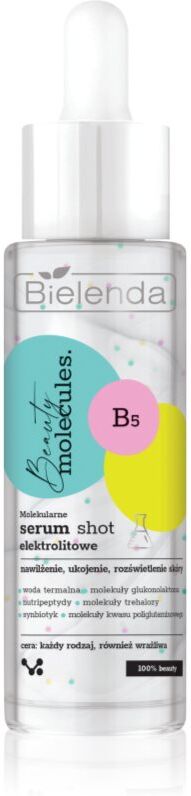
Bielenda Beauty Molecules soothing and moisturising serum 30 gBielenda Beauty Molecules, 30 g, Skin Serums for Women, Does it feel as though your skin needs something more than just the care provided by a cream? The Bielenda Beauty Molecules facial serum is the perfect product to enrich your skincare routine – it pampers the skin and delivers an intensive treatment. With its high concentration of active ingredients, the effect it has on your skin is far more pronounced and faster than with a face cream. Its liquid consistency makes application easier, as it is absorbed into the skin very well. Characteristics: hydrates and nourishes effectively brightens restores skin elasticity restores freshness and youthful beauty to your skin Ingredients: contains a minimum of 90% ingredients of natural origin How to use: Dab an appropriate amount of the serum gently into clean skin with your fingertips. Apply to the face, neck and chest.7,60 £*Shipping: 3,99 £Secure redirect to the provider
-
Bielenda Beauty Molecules serum for problem skin 30 gBielenda Beauty Molecules, 30 g, Skin Serums for Women, Does it feel as though your skin needs something more than just the care provided by a cream? The Bielenda Beauty Molecules facial serum is the perfect product to enrich your skincare routine – it pampers the skin and delivers an intensive treatment. With its high concentration of active ingredients, the effect it has on your skin is far more pronounced and faster than with a face cream. Its liquid consistency makes application easier, as it is absorbed into the skin very well. Characteristics: works on blemishes hydrates and nourishes effectively regenerates the skin and prevents irritation evens skin tone How to use: Dab an appropriate amount of the serum gently into clean skin with your fingertips. Apply to the face, neck and chest.7,20 £*Shipping: 3,99 £Secure redirect to the provider



-
Which of the following molecules are dipole molecules and why?
Molecules that have a dipole moment are considered dipole molecules. A dipole moment occurs when there is an uneven distribution of electron density within a molecule, resulting in a partial positive and partial negative charge. For example, molecules like water (H2O) and ammonia (NH3) are dipole molecules because of their polar covalent bonds, which create a separation of charge within the molecule. On the other hand, molecules like carbon dioxide (CO2) and methane (CH4) are nonpolar and do not have a dipole moment because the electronegativity of the atoms cancel each other out, resulting in a symmetrical distribution of charge. **
-
What is the difference between compound molecules and element molecules?
Compound molecules are made up of two or more different elements chemically bonded together, such as water (H2O) or carbon dioxide (CO2). Element molecules, on the other hand, are made up of two or more atoms of the same element bonded together, such as oxygen (O2) or nitrogen (N2). In compound molecules, the atoms are different, while in element molecules, the atoms are the same. **
-
Why do heptan-1-ol molecules and water molecules not mix?
Heptan-1-ol molecules and water molecules do not mix well because heptan-1-ol is a nonpolar molecule, while water is a polar molecule. Nonpolar molecules are not attracted to polar molecules, so they do not easily mix. Additionally, heptan-1-ol is hydrophobic, meaning it repels water, further preventing the two substances from mixing. This is due to the difference in the polarity and intermolecular forces between the two substances. **
-
Why are water molecules permanent dipoles and carbon dioxide molecules not?
Water molecules are permanent dipoles because they have a bent molecular shape with unequal sharing of electrons between the oxygen and hydrogen atoms. This results in a partial negative charge on the oxygen atom and partial positive charges on the hydrogen atoms, creating a permanent dipole moment. On the other hand, carbon dioxide molecules are not permanent dipoles because they have a linear molecular shape with symmetrical distribution of the two oxygen atoms and the carbon atom. This results in equal sharing of electrons and no permanent dipole moment. **


How are molecules formed?
Molecules are formed through chemical bonding between atoms. Atoms can either share electrons to form covalent bonds or transfer electrons to form ionic bonds. The type of bonding that occurs depends on the elements involved and their tendency to gain, lose, or share electrons. Once atoms are bonded together, they form a stable structure known as a molecule. **
Search for dipole molecules.
Dipole molecules are molecules that have a separation of positive and negative charges within the molecule. This separation creates a dipole moment, which results in the molecule having a positive end and a negative end. Examples of dipole molecules include water (H2O), hydrogen chloride (HCl), and ammonia (NH3). These molecules are important in various chemical reactions and interactions due to their polar nature. **
Top-Angebote
Products related to Molecules:
-
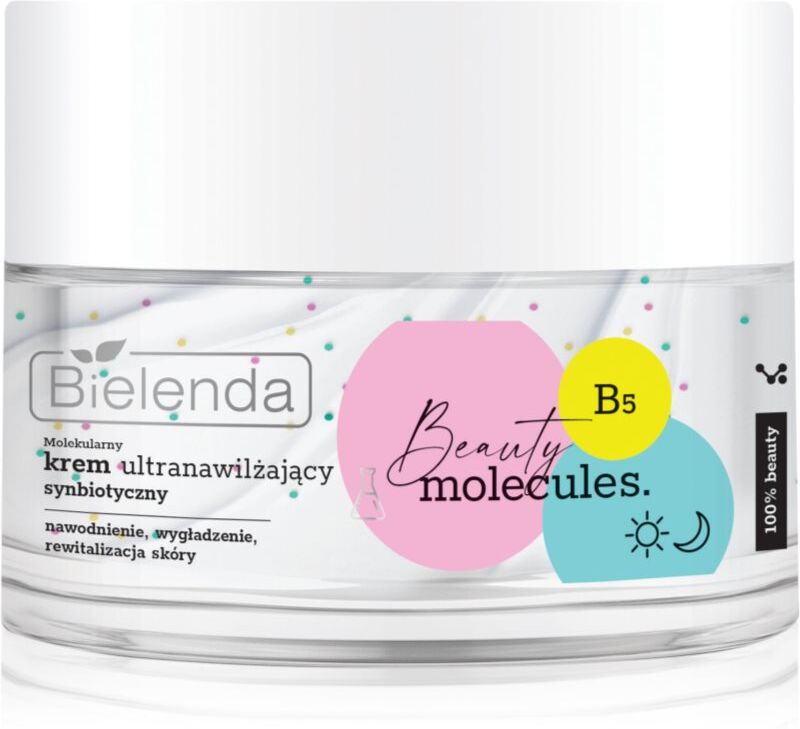
Bielenda Beauty Molecules smoothing moisturiser 50 mlBielenda Beauty Molecules, 50 ml, Moisturisers for Women, Don’t want to underestimate your skincare? Use a face cream every day – it’s a skincare staple that no beauty routine should do without, whatever your skin type and whatever your needs. The Bielenda Beauty Molecules face cream boosts the skin’s natural function, helps keep it balanced and sufficiently hydrated and contributes towards a healthier look overall. Characteristics: regenerates and vitalises moisturises intensely nourishes deeply soothes irritation and redness rejuvenates and energises the skin How to use: Apply to clean skin and massage in using circular movements. Apply to the face, neck and chest. Use every morning and/or evening.6,80 £*Shipping: 3,99 £Secure redirect to the provider
-
Escentric Molecules Cologne One EDC U 100 mlEscentric Molecules Cologne One, 100 ml, Eaux de Cologne unisex, Escentric Molecules Cologne One unisex Eau de Cologne will bring you a brand new sensory experience. Discover a fragrance that doesn’t neatly fit into a box and masterfully brings out the individuality of its wearer. a balanced composition that suits both men and women an original fragrance created for demanding perfume lovers unisex – suitable for both women and men116,10 £*Shipping: 3,99 £Secure redirect to the provider
-
Bielenda Beauty Molecules moisturising cleansing gel 195 gBielenda Beauty Molecules, 195 g, Cleansing for Women, Before you start your regular skincare routine, it is very important to prepare your skin with a thorough cleansing - without it, the following beauty care routine would not be nearly as effective. The BielendaBeauty Molecules cleanser helps to remove all the impurities that have settled on the skin and in the pores throughout the day or overnight, leaving the skin perfectly clean and ready for any further skin treatments. Characteristics: washes the whole face gently and thoroughly hydrates deeply refreshes pleasantly How to use: Apply in the morning and/or evening to a damp face and lather. Then rinse off.6,30 £*Shipping: 3,99 £Secure redirect to the provider
-
Why are there H2 molecules, but no H3 molecules and no individual H atoms in nature?
H2 molecules exist in nature because hydrogen atoms are more stable when they share electrons and form a covalent bond, creating a more energetically favorable state. H3 molecules do not exist because the formation of three hydrogen atoms sharing electrons is not energetically favorable due to the repulsion between the positively charged nuclei. Additionally, individual hydrogen atoms are highly reactive and tend to quickly form bonds with other atoms to achieve a more stable electron configuration. **
-
'Salts or molecules?'
Salts are compounds formed from the reaction of an acid and a base, while molecules are made up of atoms bonded together. Salts are ionic compounds, meaning they are made up of ions, while molecules can be either ionic or covalent compounds. Salts have a specific crystalline structure and are often soluble in water, while molecules can have a wide range of physical properties and solubilities. Overall, salts and molecules are distinct types of chemical compounds with different structures and properties. **
-
Which of the following molecules are dipole molecules and why?
Molecules that have a dipole moment are considered dipole molecules. A dipole moment occurs when there is an uneven distribution of electron density within a molecule, resulting in a partial positive and partial negative charge. For example, molecules like water (H2O) and ammonia (NH3) are dipole molecules because of their polar covalent bonds, which create a separation of charge within the molecule. On the other hand, molecules like carbon dioxide (CO2) and methane (CH4) are nonpolar and do not have a dipole moment because the electronegativity of the atoms cancel each other out, resulting in a symmetrical distribution of charge. **
-
What is the difference between compound molecules and element molecules?
Compound molecules are made up of two or more different elements chemically bonded together, such as water (H2O) or carbon dioxide (CO2). Element molecules, on the other hand, are made up of two or more atoms of the same element bonded together, such as oxygen (O2) or nitrogen (N2). In compound molecules, the atoms are different, while in element molecules, the atoms are the same. **
Similar search terms for Molecules
-
Bielenda Beauty Molecules soothing and moisturising serum 30 gBielenda Beauty Molecules, 30 g, Skin Serums for Women, Does it feel as though your skin needs something more than just the care provided by a cream? The Bielenda Beauty Molecules facial serum is the perfect product to enrich your skincare routine – it pampers the skin and delivers an intensive treatment. With its high concentration of active ingredients, the effect it has on your skin is far more pronounced and faster than with a face cream. Its liquid consistency makes application easier, as it is absorbed into the skin very well. Characteristics: hydrates and nourishes effectively brightens restores skin elasticity restores freshness and youthful beauty to your skin Ingredients: contains a minimum of 90% ingredients of natural origin How to use: Dab an appropriate amount of the serum gently into clean skin with your fingertips. Apply to the face, neck and chest.7,60 £*Shipping: 3,99 £Secure redirect to the provider
-
Bielenda Beauty Molecules serum for problem skin 30 gBielenda Beauty Molecules, 30 g, Skin Serums for Women, Does it feel as though your skin needs something more than just the care provided by a cream? The Bielenda Beauty Molecules facial serum is the perfect product to enrich your skincare routine – it pampers the skin and delivers an intensive treatment. With its high concentration of active ingredients, the effect it has on your skin is far more pronounced and faster than with a face cream. Its liquid consistency makes application easier, as it is absorbed into the skin very well. Characteristics: works on blemishes hydrates and nourishes effectively regenerates the skin and prevents irritation evens skin tone How to use: Dab an appropriate amount of the serum gently into clean skin with your fingertips. Apply to the face, neck and chest.7,20 £*Shipping: 3,99 £Secure redirect to the provider
-
Bear Grylls Adventure Collection 10 Books Set - Blizzard Challenge Desert Challenge Jungle Challen..The Bear Grylls Adventure Collection 10 Books Set Description The Blizzard Challenge Olly isn't enjoying activity camp. Why should he bother building a shelter or foraging for food with his teammates - he'd rather be at home in the warm and dry; where the sofa and the video games are. The Desert Challenge Sophie loves activity camp . . . but is terrified of insects. It's so bad that she won't go into the tent on her own; just in case something flies at her; or she steps on a creepie- crawlie. But when she's given a compass by one of the other boys on the campsite; Sophie is magically transported to the desert on an adventure where they're impossible to avoid! The Jungle Challenge Omar is fiercely competitive and very impatient about anything that holds him back. . . especially other people. Activity camp is brilliant because he's the best at all the challenges; it's just so annoying that not all his teammates are as quick or brave or strong as he is. It would be much easier just to ditch them and go it alone. The Sea Challenge Chloe is enjoying activity camp and all the outdoor fun - what's not to like? But she can't understand why everyone goes on and on about 'leaving things the way you found them'. After all; what's the big deal about a bit of litter in the middle of the woods? The world is big enough for a bit of rubbish not to matter. The River Challenge Anything that means he might have to swim and Jack is the first to duck out of it. But when he falls into a small stream at Camp; he's not just embarrassed - he's been transported to a raging river where dangers lurk around every bend. Luckily; the inspirational adventurer Bear Grylls is there to guide him through the treacherous waters and give him back some of his lost confidence... The Earthquake Challenge Fatima's loving Camp during the daytime; but pitch-black nights in the tent are scary. Then she's given a mysterious compass that transports her to a deserted city; where the aftershocks of a huge earthquake are still being felt and all the lights are out - and the buildings are falling down around her. But soon Fatima meets up with survival expert Bear Grylls; who helps her get safely out of the danger zone. Together they discover that the city's not quite as deserted as it seemed . . . and Fatima learns a few things about staying calm no matter what happens. The Volcano Challenge Charlie loves a challenge - he's addicted to video games and an expert at figuring our how to get to the next level. But sometimes the real world can seem a bit dull. Then he finds himself on the slopes of an active volcano; with red-hot lava heading his way! There's no time to be bored with Bear as his guide out of danger . . . The Safari Challenge Evie likes new experiences - except for being extremely fussy about what she eats. Suddenly she finds herself on a sun-baked safari with Bear Grylls; where food and water are scarce and dangerous wild animals prowl the plains. To survive; Evie must eat...13,48 £*Shipping: 2,99 £Secure redirect to the provider
-
Why do heptan-1-ol molecules and water molecules not mix?
Heptan-1-ol molecules and water molecules do not mix well because heptan-1-ol is a nonpolar molecule, while water is a polar molecule. Nonpolar molecules are not attracted to polar molecules, so they do not easily mix. Additionally, heptan-1-ol is hydrophobic, meaning it repels water, further preventing the two substances from mixing. This is due to the difference in the polarity and intermolecular forces between the two substances. **
-
Why are water molecules permanent dipoles and carbon dioxide molecules not?
Water molecules are permanent dipoles because they have a bent molecular shape with unequal sharing of electrons between the oxygen and hydrogen atoms. This results in a partial negative charge on the oxygen atom and partial positive charges on the hydrogen atoms, creating a permanent dipole moment. On the other hand, carbon dioxide molecules are not permanent dipoles because they have a linear molecular shape with symmetrical distribution of the two oxygen atoms and the carbon atom. This results in equal sharing of electrons and no permanent dipole moment. **
-
How are molecules formed?
Molecules are formed through chemical bonding between atoms. Atoms can either share electrons to form covalent bonds or transfer electrons to form ionic bonds. The type of bonding that occurs depends on the elements involved and their tendency to gain, lose, or share electrons. Once atoms are bonded together, they form a stable structure known as a molecule. **
-
Search for dipole molecules.
Dipole molecules are molecules that have a separation of positive and negative charges within the molecule. This separation creates a dipole moment, which results in the molecule having a positive end and a negative end. Examples of dipole molecules include water (H2O), hydrogen chloride (HCl), and ammonia (NH3). These molecules are important in various chemical reactions and interactions due to their polar nature. **
* All prices are inclusive of VAT and, if applicable, plus shipping costs. The offer information is based on the details provided by the respective shop and is updated through automated processes. Real-time updates do not occur, so deviations can occur in individual cases. ** Note: Parts of this content were created by AI.